
Tree Cabling and Bracing: When Structural Support Is Needed
Tree Cabling System in Delaware, Northern Maryland, and Southeastern Pennsylvania
They add beauty, provide shade, and increase property values in northern Maryland and southeastern Pennsylvania. Yet even healthy trees can develop structural weaknesses that make them more susceptible to damage from storms, the breaking off of branches, or the trunk splitting. In cases where a tree has a weak structure but is otherwise in good health, removal is not always the best course of action. It is possible to preserve valuable trees by using professional tree cabling and bracing systems, which at the same time improve safety and stability.
Knowing when to provide structural support can help property owners to protect not only their investment in their landscape but also the people nearby. Learn more about a tree cabling system in Delaware, Northern Maryland, and Southeastern Pennsylvania.
What Are Tree Cabling and Bracing Systems?
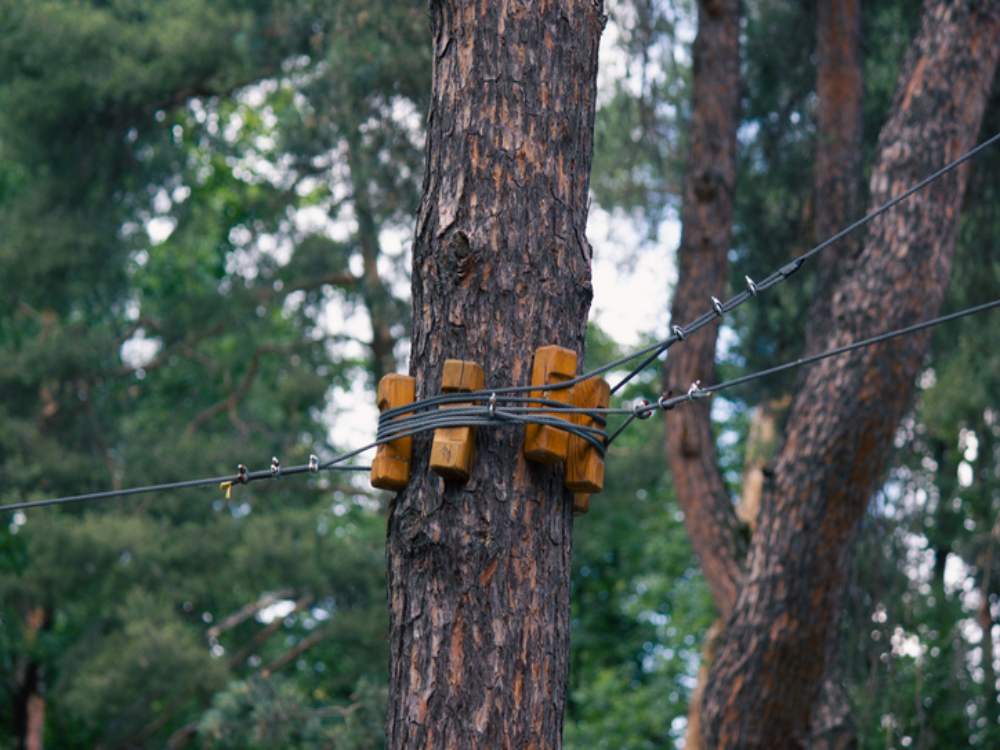
Tree cabling and bracing are special kinds of structural tree care that are intended for use with trees that have weak branches, cracked trunks, or other structural faults.
A typical tree cabling system involves the use of high-strength steel cables or more advanced synthetic supporting materials, which are fitted into the canopy. Their purpose is to restrict excessive movement of the branches and to aid in the more even distribution of stress through the tree when it is subjected to high winds, heavy rain, snow, and ice.
Tree bracing support consists of putting threaded steel rods through weak branch unions, split trunks, or cracked stems. The bracing offers rigid reinforcement in those areas where extra strength is needed to stabilize the damaged sections.
The combination of cabling and bracing results in stable solutions for trees, lowering the chance of branch failure and, at the same time, enabling the tree to grow naturally. In numerous instances, such systems aid in the preservation of mature trees that would probably have to be removed otherwise.
Signs a Tree May Need Structural Support
It is not necessary for all trees to have cabling or bracing, but in some cases, structural problems suggest that it may be advisable to get a professional’s opinion.
Some common warning signs our team has found include:
- Multiple trunks growing from a single point
- V-shaped branch unions with included bark
- Heavy limbs extending far from the main trunk
- Visible cracks in major branches or trunks
- Trees with previous storm damage
- Leaning sections that place stress on the canopy
- Splitting trunks or weakened branch attachments
- Mature trees supporting large, overextended limbs
The Benefits of Cabling and Bracing Trees
Tree support systems offer a number of important benefits for both the tree and the property owner. Here are some of the benefits of cabling and bracing trees:
Improved Safety
A major objective of structural support systems is to reduce the likelihood of branches or the trunk failing. Cabling and bracing help to achieve safer outdoor areas by strengthening the weak spots.
Tree Preservation
Mature trees often have considerable environmental, aesthetic, and property advantages. In many cases, structural support can cause a tree that would otherwise be deemed for removal to have its life extended.
Storm Resistance
Northern MD and southeastern PA experience severe thunderstorms, strong winds, ice accumulation, and heavy snow. Support systems help limit excessive movement that can lead to structural failure during major weather events.
Reduced Property Damage Risk
Trees that are well supported are less likely than others to lose large branches, which could damage houses, cars, fences, or utility lines.
Better Long-Term Tree Health
If fitted properly, a tree cabling system is able to reduce the stress on the weak parts of the tree while at the same time permitting normal growth and development. Taking this forward-looking method helps to ensure the tree’s long-term structural strength without making a significant change to its natural appearance.
Cabling vs. Bracing: Understanding the Difference
Even though they are frequently mentioned together, cabling and bracing have different functions. Explore the difference between the two:
Tree Cabling
Cabling is mainly used in order to prevent too much movement within the canopy, with flexible cables being fitted between the main branches or stems to redistribute the weight and decrease the strain during storms.
Cabling is frequently recommended for:
- Co-dominant stems
- Heavy horizontal limbs
- Large mature shade trees
- Trees with structurally weak branch unions
A comprehensive strategy for fixing a leaning tree often includes taking into account the weight of the tree’s canopy, as this contributes to uneven stress.
Tree Bracing
Bracing gives rigid support to sections that are weak or have been damaged by passing steel rods through the damaged wood.
Bracing is commonly used for:
- Cracked trunks
- Split stems
- Weak branch unions
- Trees requiring advanced split tree repair
In certain cases, bracing is used along with cabling in order to achieve the most effective support.
Common Trees That Benefit from Structural Support in Northern MD & Southeastern PA
Many of the tree species which are commonly found in northern Maryland and southeastern Pennsylvania are susceptible to structural problems and could benefit from the use of professional support systems.
These include:
- Red maple
- Silver maple
- Bradford pear
- Pin oak
- White oak
- Tulip poplar
- American beech
- River birch
Why Professional Evaluation Matters
Tree cabling and bracing must never be attempted by individuals on their own. Since every tree has its own particular structural features, growth patterns, and risk factors, these have to be carefully assessed.
A trained arborist can determine:
- Whether support is appropriate
- Which support system is needed
- The correct installation location
- The level of reinforcement required
- Whether other tree care services are necessary
Incorrect installation may result in extra stress or might fail to deal with the fundamental structural issue. Having a professional assess the situation will make it possible to find the most effective tree stability solutions for that particular case.
FAQ: Tree Cabling and Bracing
The length of time that a support system lasts is determined by the materials used, the growth of the tree, and the environmental conditions. A great many systems can stay effective for several years if they are correctly installed and regularly inspected by a qualified arborist.
In numerous instances, yes. When a tree is generally in good health, a cabling system or bracing support for the tree might be used to stabilize any structural weaknesses and lower the chance of failure. That said, trees that are severely damaged may still need to be removed.
It is the opinion of most arborists to carry out regular inspections, especially following severe storms or major weather events. Periodic checks help to make sure that the cables, rods, and attachment points keep on offering safe and effective support.
Early intervention is usually the best way of keeping valuable trees. Professional structural tree treatment, such as cabling and bracing, can be used to protect mature trees and, at the same time, increase safety in northern Maryland and southeastern Pennsylvania. Contact our team at Stein Tree today to learn more!
The Benefits of Tree Health Inspection in Delaware, Northern Maryland, and Southeastern Pennsylvania
Trees are valuable assets since they add…
The trees on your residential or commercial property add value and boost your curb appeal when they’re at their best. But, unfortunately, they’re…