
How to Determine If a Tree Can Be Saved or Needs Removal
Trees add beauty, shade, and value to any property. But when a tree starts looking unhealthy, it can be hard to know what to do next. Should you treat it or take it down? Making the wrong call can be costly and even dangerous. Stein Tree Service helps homeowners in Delaware, northern Maryland, and southeastern Pennsylvania answer this question every day. We’ve also compiled this guide highlighting what to look for and how a professional tree risk assessment can inform your decision.
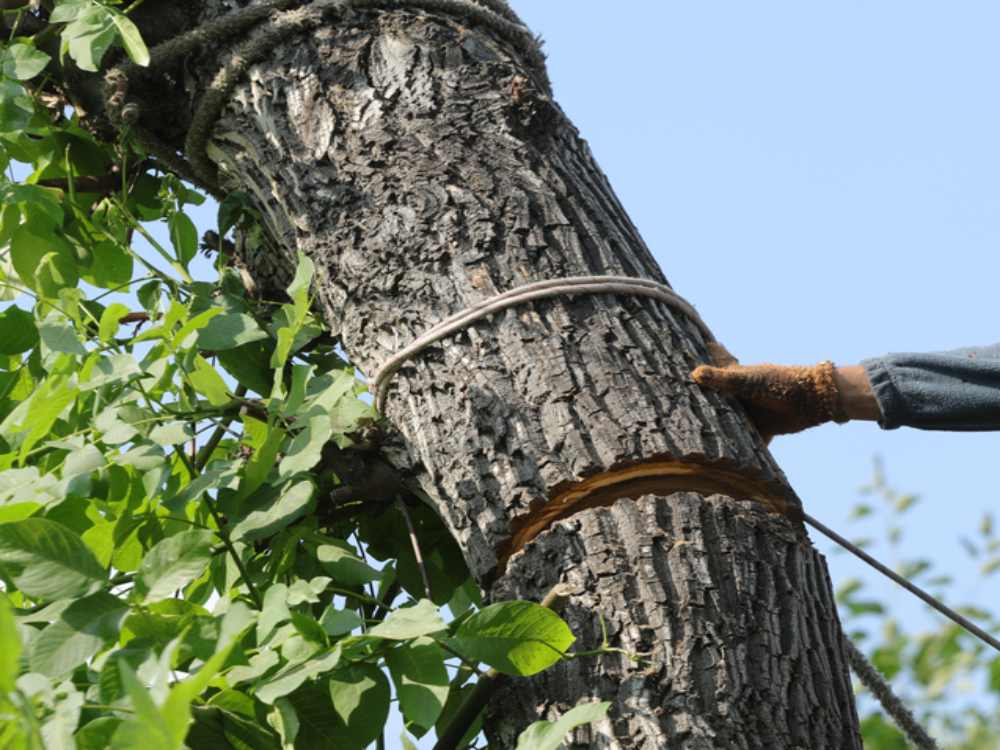
Why Tree Health Decisions Matter
A declining tree doesn’t just look unsightly. It may be a serious safety hazard, as dead or weakened branches can fall without warning. However, not every sick-looking tree is dead or in need of removal. Many can recover with the right care. We’ll help you make the best decision to protect your property, your family, and the environment around your home.
Key Signs a Tree Can Be Saved
Not all unhealthy tree symptoms mean the tree is beyond help. If you notice the following signs that tree preservation may still be possible, seek a tree health evaluation from one of our arborists to determine a realistic path forward:
- New Growth on Branches – When fresh buds or leaves are sprouting, the tree still has energy and may recover with treatment.
- Mostly Solid Wood – A scratch test on the bark can reveal green, moist wood beneath, indicating a living tree.
- Limited Dead Branches – If only a small number of branches are dead, a certified arborist may be able to prune them and stabilize the tree.
- Treatable Disease or Pest Damage – Some fungal infections and insect infestations can be managed with targeted treatments before they spread.
- Healthy Root Zone – Roots that appear intact and undamaged give a tree a strong foundation for recovery.
Warning Signs That Indicate Removal May Be Necessary
Some tree decline signs suggest the risks outweigh the benefits of saving the tree. Watch for these red flags:
- Hollow or Heavily Decayed Trunk – A trunk that is rotting from the inside loses structural integrity and can collapse unpredictably.
- Large Dead Sections Throughout the Canopy – When more than half of a tree’s canopy is dead, recovery is unlikely.
- Severe Lean – A tree that has recently shifted its lean – especially after a storm – may have damaged roots and could fall.
- Root Damage or Decay – Fungi like mushrooms growing at the base of the tree often signal serious root rot.
- Cracks or Splits in the Trunk – Deep cracks can indicate that the tree is structurally failing.
- Location Near Structures – Even a moderately unhealthy tree becomes a priority for removal when it sits close to a home, power line, or high-traffic area.
Environmental Factors in Delaware, Maryland, and Pennsylvania
Trees in the Mid-Atlantic face specific regional stressors. Wet springs, summer heat, and winter ice storms can all weaken trees over time. Our region is also home to damaging pests like the emerald ash borer and spotted lanternfly, both of which can cause rapid tree decline. Furthermore, trees in areas with poor drainage or compacted soil are more vulnerable to disease. Understanding these factors is a key part of any accurate tree health evaluation.
Our Professional Tree Risk Assessment Process
Stein Tree Service’s certified arborists follow a structured tree risk assessment process that includes:
- Visual Inspection – We examine the full tree for visible signs of damage, disease, or structural weakness.
- Disease and Pest Diagnosis – We identify any active infections or infestations and evaluate how far they’ve spread.
- Site Evaluation – We consider the tree’s location, proximity to structures, and surrounding landscape conditions.
- Recommendations – Upon request, we provide clear guidance on whether tree preservation, treatment, or removal is the right course of action.
Tree Preservation vs. Removal: How We Guide the Decision
The goal of a tree risk assessment is never to remove trees unnecessarily. Preservation is always the preferred outcome when it’s safe and realistic. However, when a tree poses a genuine risk to people and property, removal is the responsible choice. Our arborists weigh the tree’s current health, its recovery potential, and the risks it poses in its current location.
FAQ About Tree Removal vs. Saving
Scratch a small section of bark with your fingernail. If you see green underneath, the tree is likely alive. Brown, dry wood suggests the branch or tree may be dead. An arborist can confirm this during an inspection.
It depends on the cause. A tree that has always grown at a slight angle may be stable. A tree that has recently shifted its lean may have compromised roots and should be evaluated immediately.
Costs vary depending on tree size, location, and the complexity of the evaluation. Stein Tree Service can provide a quote specific to your property.
Some pruning is recommended in the colder months to minimize stress on the tree, and certain PHC treatments are intentionally seasonal. However, tree removal can be performed year-round. Your arborist can advise on the best timing for your specific situation.
Contact Us for an Arborist Tree Inspection Today
An early tree risk assessment will give you more options and more time to act before a problem becomes dangerous. Our certified arborists provide guidance for property owners in Delaware, northern Maryland, and southeastern Pennsylvania. Contact us today to schedule a tree health evaluation.
The following is an example of the type of services Stein Tree Service has been asked to perform for commercial purposes.
In this example, a…
If you’re collecting quotes for pruning, removals, storm cleanup, or plant health care, insurance shouldn’t be an afterthought. People often…