
Emergency Tree Care: What to Do After Storm Damage
Storm-Damaged Trees in Delaware, Northern Maryland, and Southeastern Pennsylvania: What to Do After Storm Damage
Storms are capable of causing a line of destruction on both residential and commercial properties, frequently leading to serious damage to trees. Due to high winds, heavy rain, lightning strikes, and saturated soil, dangerous situations can arise that need to be dealt with right away. At Stein Tree, we realize how stressful it can be to cope with trees that have been damaged by storms and the safety issues that come with them.
Taking the correct actions following a storm can aid in protecting your property, lower the risks involved, and increase the chances of saving valuable trees. This guide outlines how to react safely, when it is necessary to get professional assistance, and how to help ensure the long-term health of the trees after intense weather.
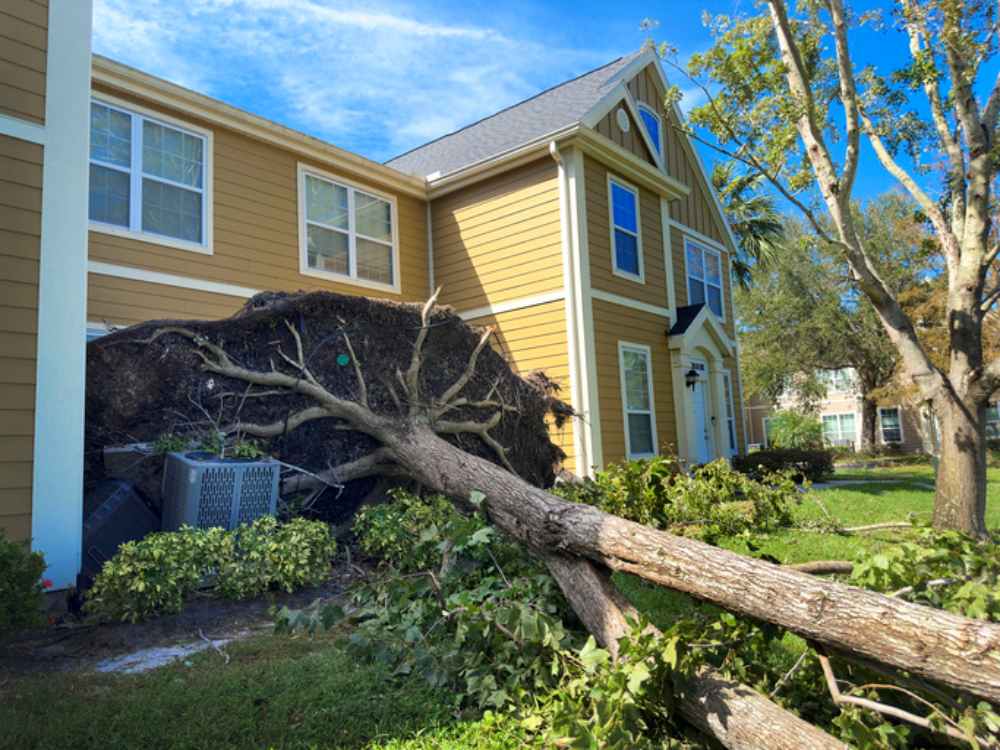
Common Types of Storm Damage to Trees
The effect that storms have on trees varies according to the size, condition, and position of the trees. In some cases, the damage is obvious; in other instances, it may not be seen for days or weeks later.
Common forms of storm damage include:
- Trees often have their branches broken as a result of strong winds or ice building up.
- Trunks have been split as a result of wind pressure or structural weaknesses.
- Trees were uprooted because of saturated soil and weak root systems.
- Trees that, when their roots are damaged, become unstable.
- Damage caused by lightning resulting in deep cracks or internal decay.
- Trees that fall on homes, vehicles, fences, or utility lines.
Immediate Steps to Take After a Storm
The period right after a storm is important for ensuring safety and for avoiding further damage to property. Before carrying out any other action, you should confirm that the severe weather has fully ended.
Follow these important steps:
- Avoid any fallen trees and hanging branches.
- Make sure that members of the family and your pets do not enter the areas that have been damaged.
- Do not choose any tree that is in contact with power lines.
- Take photographs of the document to show the visible damage for the purposes of insurance.
- Carefully check your property for any driveways that are blocked, structures that are damaged, and debris.
- If a tree has created a dangerous situation, you should contact emergency services.
Assessing Tree Damage Safely
A good number of property owners would like to look at trees that have been damaged immediately. It is reasonable to notice any visible problems, but a safe evaluation has to be carried out with care. Start by viewing the tree from a distance and look for any signs which show that it may be structurally unstable or pose a hazard.
Key warning signs include:
- There are big cracks in the trunk.
- Branches hanging overhead.
- Exposed or lifted roots.
- Newly developed leaning.
- Splits that occur where the major limbs attach to the trunk.
- Movement of the soil around the base of the tree.
It is advisable not to climb trees or stay under broken branches since even those branches which seem secure may suddenly fall. Because of this, professional arborists are able to safely and accurately assess trees that have been damaged in a storm due to their specialized training and equipment.
When to Call an Emergency Tree Service
It is not necessary in all cases to remove a damaged tree, but in some instances, urgent attention from a professional is required. Delaying the service can put people, buildings, and vehicles at risk.
You should contact an urgent arborist service when:
- A tree has crashed down on a house or a building.
- Limbs are obstructing driveways, roads, or entrances.
- A tree is touching the power lines.
- The trunk has split a great deal.
- The tree is leaning in the direction of the structure.
- The big branches are dangling above.
Professional emergency tree removal services are able to stabilize dangerous situations and, at the same time, reduce the chance of further damage; in addition, experienced teams can carry out the cleaning up of fallen trees in a safe and efficient manner. Safety is a priority for us at Stein Tree, and we aim to offer practical solutions following severe weather events.
Can Storm-Damaged Trees Be Saved?
It is often thought that trees that have been damaged must be cut down, but that isn’t always true. Whether or not the tree can recover depends on the degree of the damage, the type of tree, its age, and its general health.
Trees may be salvageable when:
- The canopy has less than half of its area affected.
- The trunk is still structurally sound.
- The root system is mostly still there.
- Broken limbs should be pruned properly.
Removal may be necessary when:
- The trunk has a severe split.
- The main roots have been destroyed.
- There is a continuing safety risk presented by the tree.
- It is impossible to regain structural stability.
After a storm, the care of trees usually involves corrective pruning, the installation of cabling, bracing, and continuous monitoring. A certified arborist will be able to suggest the most suitable course of action according to the condition of the tree.
Preventing Future Storm Damage
Although no tree can be entirely protected from severe weather, carrying out preventative maintenance can greatly decrease the risks associated with storms.
Helpful prevention strategies include:
- Schedule regular tree inspections.
- Take out any branches that are dead or have weakened.
- Trim the trees to improve their structure and balance.
- Keep an eye on the trees for any disease or decay.
- Take steps to address any issues relating to root health as early as possible.
- Install support systems when appropriate
FAQs
To prioritize safety, you should keep all other people away from the area affected. Do not touch the tree, particularly in the case where power lines are involved. Make a record of the damage, arrange for emergency services to be contacted if needed, and get in touch with a professional tree service for the safe removal and clearance of the tree.
While small amounts of debris may be dealt with easily, large branches and those that are hanging can be very dangerous. To remove the damaged branches safely and to lower the risk of injury, one should employ professional arborists who have the necessary equipment and expertise.
Certainly, a great many emergency tree service companies keep records of the damage, take photographs, and supply detailed service records, all of which can be of help in the insurance claims process.
Contact Our Team Today
At Stein Tree, we are dedicated to offering prompt and professional service and to assisting homeowners in making well-informed decisions regarding trees that have been damaged by storms. If you have a hazardous tree following storm conditions or if you need immediate arborist services, call Stein Tree now to arrange a quick evaluation and receive expert recommendations that will restore safety and help protect your landscape.
Trees add beauty, shade, and value to any property. But when a tree starts looking unhealthy, it can be hard to know what to do next. Should you…
The following is an example of the type of services Stein Tree Service has been asked to perform for commercial purposes.
In this example, a…